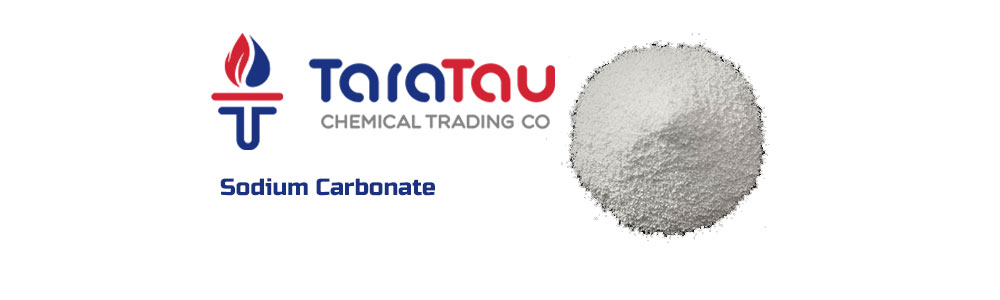

Application of light and heavy sodium carbonate in industry:
Removal of mold and de-molding of wood.
Its most important application is in the production of glass.
In pretzels (salted bread), pH changes the level of food.
In brick making workshops as a pasting agent.
For immediate preparation of pasta and in the production of wooden ice cream.
It acts as a good conductor in electrolysis.
This substance fights with magnesium and calcium ions in hard water.
It is used as the main standard of acid and base titration.
Sometimes as a substitute for sodium hydroxide for alkalizing.
It is used as a water softener in washing clothes.
As a common additive in urban tanks to neutralize the acidic effect of chlorine and increase the pH
It is effective as an anti-sediment agent, including deposits in kettles and steam machines.
It is found in the detergent section under the name of shurah grass (ashnan) and it effectively removes oil, grease, and alcohol stains.
It is used in detergent and soap production industries, paint and dye industries, textile industries, leather making, paper, metal industries, salt purification units, battery manufacturing, casting and other chemical industries.
Soda is also used in processes that require alkali, such as papermaking (5%), soap and cleaners (5%), preparation of silicate glue (20%), purification of alumina and other non-ferrous metals, desulfurization of smoke, metallurgy. , reducing water hardness and water purification. The amount of soda in household and industrial cleaners ranges from 10 to 40%.
Other uses such as preparation of NaOH, artificial zeolite, precursor for the production of chemicals (10%) can be mentioned for sodium carbonate.
Uses in the glass industry:
45% of the global production of sodium carbonate is used in the glass industry. The use of alkaline materials such as Na2CO3 in glass making reduces the temperature of glass formation from 1700 to 1500-1450 degrees Celsius, which saves energy and also increases the life of fireproofing. Adding feldspar or nepheline syenite and things like that lower this temperature again and produce water-soluble glass to which CaO and MgO are added for stabilization. Sodium carbonate comprises less than 20% of the volume of all common soda-lime glass, but accounts for 60% of the cost (flat glass, window glass, glass containers). Other types of glass can use less sodium carbonate because they require smaller amounts of soda. Such as borosilicate glasses, pyrex, flat glass containers, fiberglass, laboratory equipment, TV and monitor glass, and more.
Packing and delivery: bags 25 kg in jumbo bags 1250 tons.